Unify Your Data, Analytics, Power BI and AI with Microsoft Fabric
Microsoft Fabric is an end-to-end data and analytics platform that brings data integration, engineering, warehousing, data science, real-time intelligence, business intelligence and AI together in one environment.
Built around OneLake, Fabric gives organizations a unified foundation for connecting, storing, transforming, governing and analyzing data across the business. Power BI is built directly into Fabric, helping organizations move from raw data to business insights while reducing the need to assemble and integrate separate analytics services.
Whitecap helps organizations design, implement and optimize Microsoft Fabric solutions that bring together their business data, Power BI reporting, advanced analytics and AI.
As a Microsoft Solutions Partner with decades of experience developing and integrating business systems, we can help you build a modern data foundation designed around your organization's existing technology, data and business requirements.
About Microsoft Fabric
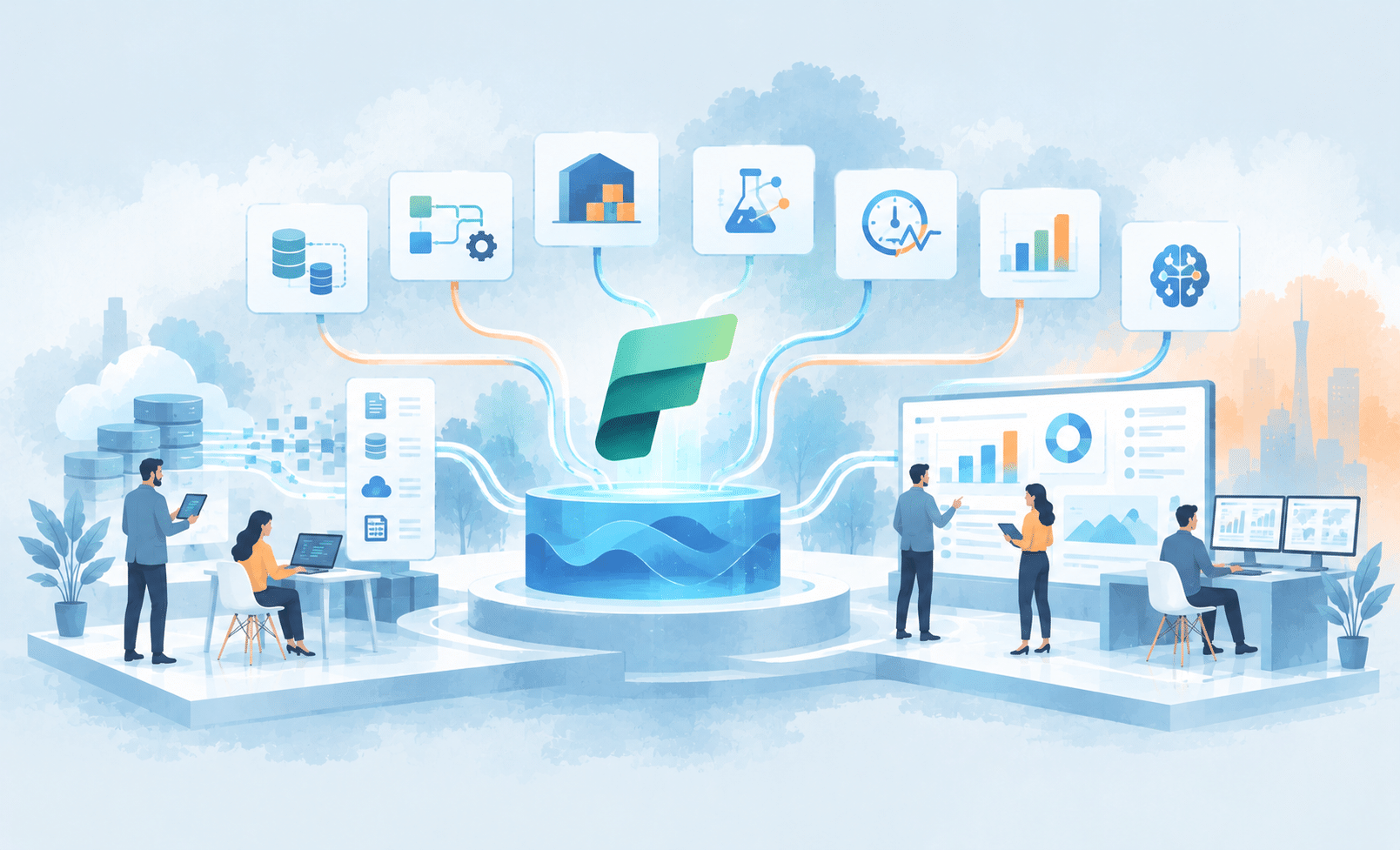
Microsoft Fabric is Microsoft's unified SaaS data and analytics platform.
Instead of using separate services for data integration, engineering, warehousing, data science, real-time analytics and business intelligence, Fabric brings these capabilities together within a common environment.
Fabric can help organizations connect business data, prepare it for analysis and make it available across reporting and analytical tools.
Its capabilities include:
- Data integration and preparation across applications, databases and cloud services.
- Lakehouses and warehouses for organizing analytical data.
- Power BI semantic models, interactive reports and dashboards.
- Streaming and event-based analytics for time-sensitive decisions.
- Data science, predictive analytics and supported generative AI capabilities.
A unified platform does not automatically make data accurate or governed. Successful implementation also requires clear business definitions, data ownership, quality controls and appropriate access permissions.
Microsoft Fabric & Power BI
Power BI is a core component within Microsoft Fabric.
Power BI provides the semantic modeling, visualization, reporting and self-service analytics layer, while Fabric provides the broader data foundation needed to ingest, store, transform, govern and analyze data across the organization.
Organizations already using Power BI can adopt Fabric capabilities where they add value, while continuing to use their existing reporting environment. This may include centralizing data preparation, sharing business logic across reports or introducing engineering, warehousing and advanced analytics.
Direct Lake is one option for connecting Power BI semantic models to supported data stored in OneLake without a traditional full import into the model. Whitecap assesses model design, capacity, security and performance requirements to determine the appropriate approach.
Not every Power BI environment needs a broader Fabric implementation. We help determine whether your requirements are best met through improvements to existing reporting, selected Fabric components or a more comprehensive data platform.

AI in Microsoft Fabric
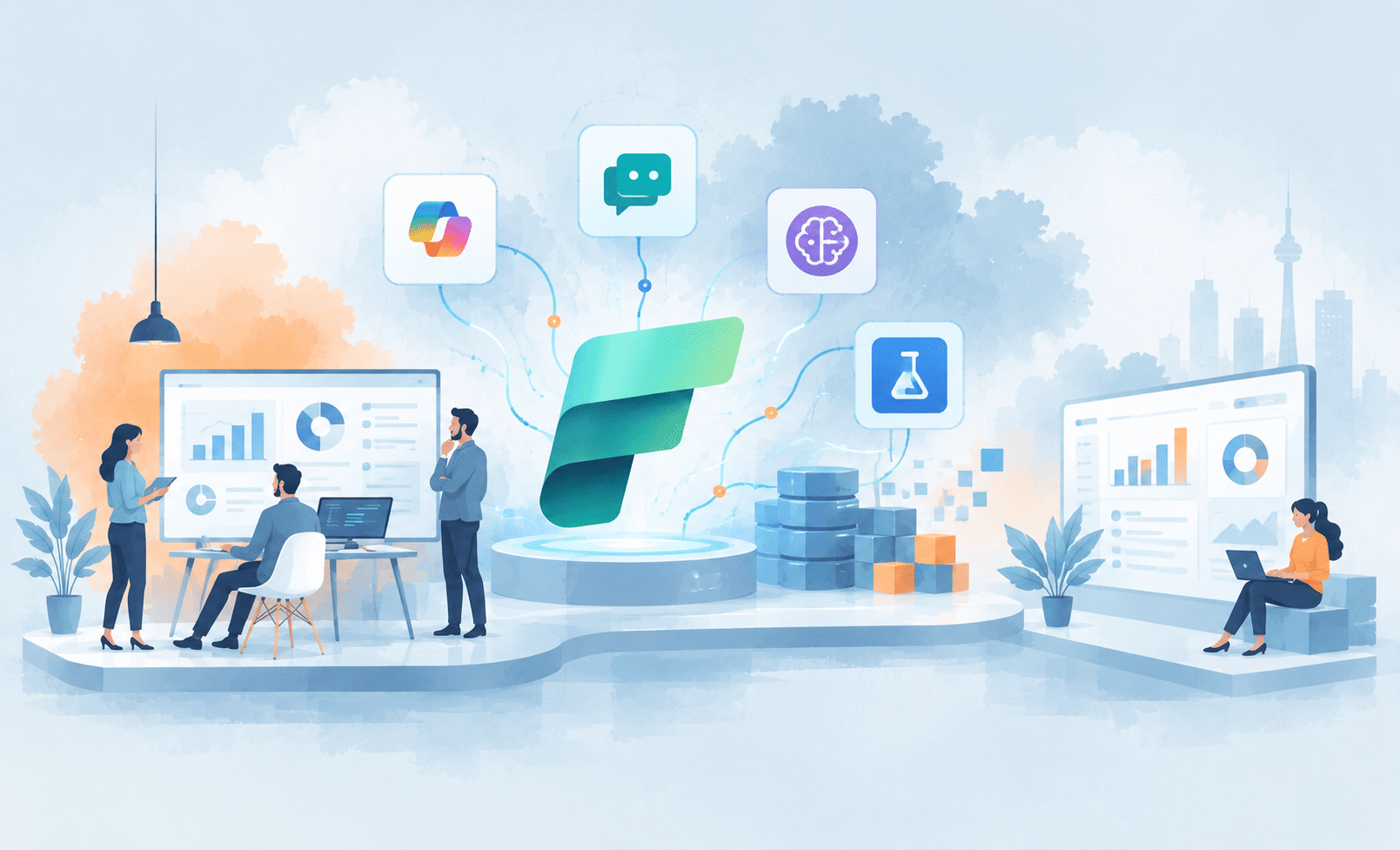
Microsoft Fabric brings data, analytics and AI together on a unified platform, helping organizations create the trusted, governed data foundation that effective AI requires.
Different Fabric AI capabilities support different business needs:
- Copilot: Assist users with supported development and analytical tasks through natural-language interactions.
- Fabric Data Agents: Answer questions about supported business data through read-only access within the user's permissions.
- AI Functions: Apply capabilities such as classification, summarization and information extraction to data in supported Fabric experiences.
- Data Science: Develop and evaluate predictive models for suitable business scenarios.
Whitecap can help prepare your data for AI, implement appropriate capabilities and connect Fabric with Power BI, Copilot Studio or custom AI solutions.
OneLake, One Data Foundation
OneLake is the unified data lake at the foundation of Microsoft Fabric.
Rather than maintaining separate data stores for different analytics teams and tools, OneLake provides a common location for organizational analytics data.
Fabric services can access the same underlying data, helping organizations reduce unnecessary copies, simplify data management and establish a more consistent source of trusted information.
OneLake also supports shortcuts, which can provide access to data stored in locations such as Azure Data Lake Storage, Amazon S3 and other supported platforms without requiring the data to be physically migrated into OneLake.
Whitecap designs the organization, access and use of OneLake around your data sources, reporting needs and governance requirements.

Microsoft Fabric Services
-
Fabric Strategy & Architecture
Implementing Fabric effectively requires more than turning on individual components.
We assess your business priorities, existing data estate, reporting requirements and internal capabilities to determine where Fabric fits. We define architecture, workspaces, storage, integration patterns, security and governance, while considering capacity, licensing and expected operating costs. The result is a practical implementation roadmap focused on the tools that address your needs.
-
Fabric Implementation & Migration
We design and implement end-to-end Fabric environments tailored to your organization’s analytics requirements. We can also assess existing warehouses, reporting environments and data platforms to determine which function should move to Fabric and which should remain in place.
Implementation and migration planning can include dependency assessment, data reconciliation, parallel validation, controlled deployment and handover. The objective is to introduce the required capabilities while managing the transition from existing systems.
-
Data Integration & Data Factory
Fabric Data Factory provides tools for connecting, ingesting, preparing, transforming and orchestrating data from cloud, on-premises and other data sources.
We can build data pipelines and dataflows that bring information from multiple systems together and prepare it for reporting, analytics and AI.
-
Data Engineering & Lakehouse Development
We build scalable data engineering solutions for collecting, transforming and organizing large volumes of structured and unstructured data.
Fabric lakehouses combine the flexibility of a data lake with capabilities traditionally associated with analytical databases, creating a common foundation for engineering, analytics, Power BI and AI.
-
Fabric Data Warehouse
Fabric provides an enterprise data warehouse experience built on the shared OneLake foundation.
We can design and implement data warehouse solutions that consolidate information from multiple systems, apply consistent business logic and make trusted data available for enterprise reporting and analysis.
-
Power BI & Semantic Models
We design Power BI semantic models, dashboards and reports that turn Fabric data into meaningful business information.
Using capabilities such as Direct Lake, organizations can create high-performance analytical experiences over data stored in OneLake while reducing unnecessary data movement and refresh processes.
-
Data Quality, Security & Governance
Useful analytics requires information that people can understand and trust.
We work with your team to confirm business definitions, reconcile key data and clarify ownership of source information. We can establish validation checks and exception handling to help identify discrepancies before they affect reporting.
We also design access controls and governance practices around your audiences, data sensitivity and responsibilities, including permissions, release controls and appropriate handling of information used by AI.
-
Data Science & Advanced Analytics
Fabric brings data science into the same environment as engineering, warehousing and business intelligence.
We can help organizations develop predictive models and advanced analytics solutions and make their outputs available to business users through Power BI and other applications.
-
Real-Time Intelligence
Some decisions cannot wait for the next scheduled report. Fabric Real-Time Intelligence can ingest, process, analyze and visualize streaming and event-based data as it arrives.
Organizations can use these capabilities for scenarios such as operational monitoring, application telemetry, IoT data, customer activity, logistics and other time-sensitive processes.
Whitecap can assess event sources, processing requirements, monitoring and response needs to design an appropriate solution. Fabric Activator can use configured rules to trigger notifications, Power Automate workflows or other supported actions when defined conditions occur.
-
Mirroring & Data Modernization
Fabric Mirroring can continuously replicate supported operational data sources into OneLake, making current data available for analytics without relying solely on traditional ETL processes or scheduled refreshes.
This can provide a simpler path for organizations looking to modernize existing analytics environments while continuing to use operational databases and applications.
-
AI & Data Agent Development
We can help organizations use their Fabric data as the foundation for AI-powered applications, copilots and agents.
This can include preparing and governing enterprise data for AI, implementing Fabric Data Agents, applying AI Functions to business data, and connecting Fabric data with Microsoft Copilot Studio or custom AI applications.
-
Fabric Support & Optimization
Whitecap can review, support and improve existing Fabric environments, including those developed by other teams.
Services can include investigating pipeline and refresh failures, improving performance, reviewing capacity usage, strengthening governance and managing enhancements. We can also provide training, documentation and knowledge transfer, with ongoing support responsibilities agreed for each engagement.
Microsoft Fabric In Practice
Microsoft Fabric can support a wide range of data and analytics needs, from consolidating disconnected data sources to modernizing Power BI environments and building a foundation for AI. Here are examples of how Whitecap is helping clients put Fabric into practice.

Whitecap implemented a Microsoft Fabric analytics environment connecting data from Shopify, NetSuite, Repsly and SharePoint. We organized data into stages for ingestion, preparation and reporting, and centralized business logic previously maintained within individual Power BI reports. This established a shared data foundation for more consistent reporting and future analytics requirements.

Whitecap implemented a Microsoft Fabric analytics environment connecting Applied Epic data from Goolge BigQuery. The project focused on bringing in financial data (i.e. General Ledger, P&L, Balance Sheet, Accounts Receivables etc.) by developing the end-to-end process from ingestion to lakehouse, cleaning, transforming preparing and modeling data to a centralized semantic layer to be used by multiple financial reports.

Whitecap helped pioneer the use of Microsoft Fabric with any data and analytics for Appleby College. It started off with a more focused project the revolves around Student Wellbeing. The goal was to bring in data relating to academics, attendance, co-curricular activities, student engagement, etc. and put those puzzle pieces together to form a purview of a student’s wellbeing that can be easily tracked by school personnels like guidance counselors, advisors and teachers.
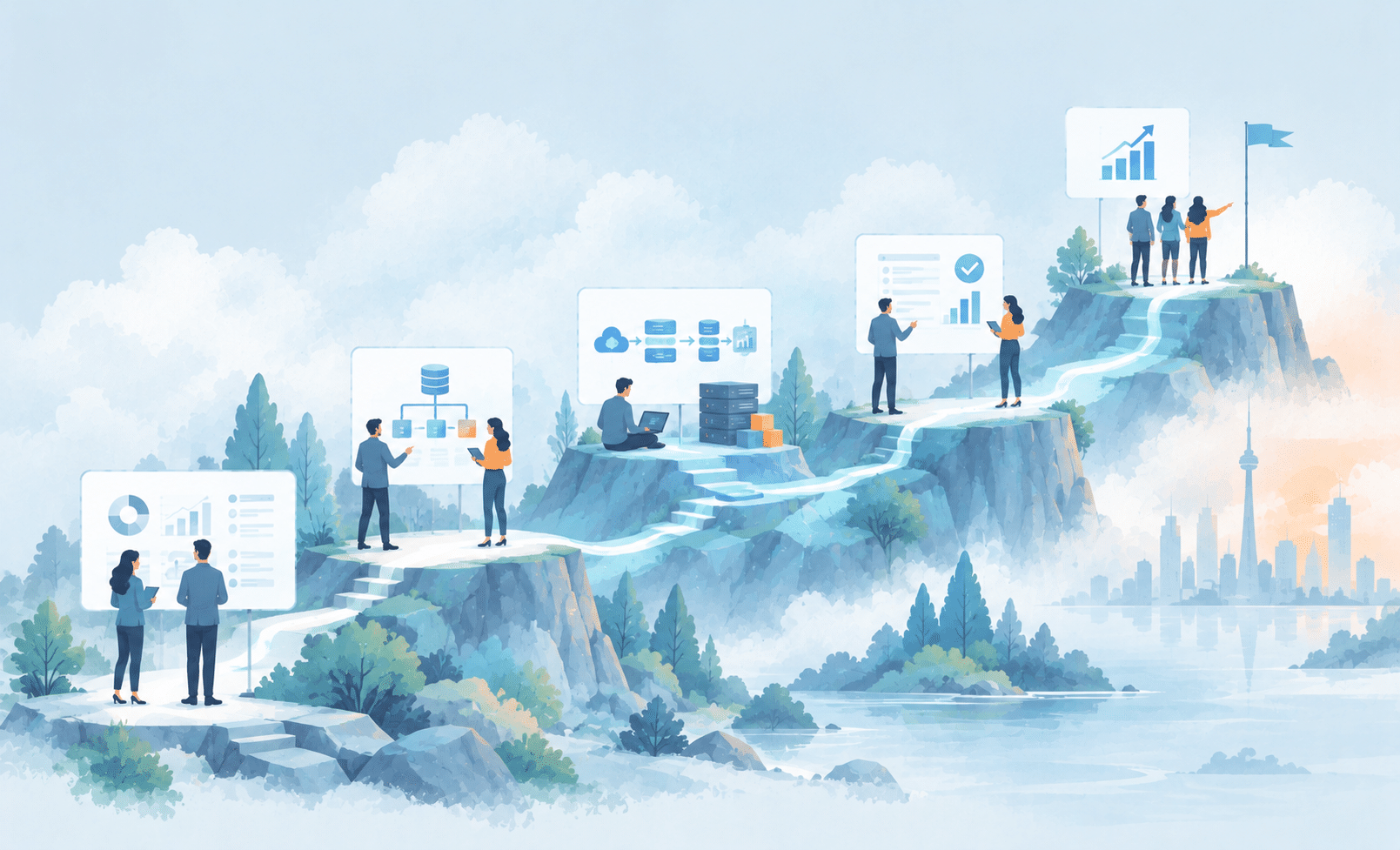
Our Microsoft Fabric Approach
Assess: Review business priorities, the current data estate, reporting requirements, data quality, ownership and expected operating costs.
Architect: Define the target architecture, OneLake strategy, integration patterns, security, governance and capacity requirements.
Implement: Build pipelines, lakehouses, warehouses, semantic models, Power BI solutions and other required Fabric components.
Validate & Deploy: Reconcile data and business measures, test performance and permissions, and coordinate controlled production deployment.
Enable & Optimize: Provide documentation, training and knowledge transfer, define operational ownership, and establish agreed monitoring, support and optimization arrangements.