|
Getting your Trinity Audio player ready...
|
Custom software can feel complex, especially when you’re weighing cost, timelines, risk, and long-term value. This FAQ answers the most common questions we hear from business and technology leaders, helping you understand when custom software makes sense and what to expect before you invest.
Q: What is custom software?
A: Custom software is software designed and built specifically for your organization’s needs, workflows, and users. Unlike off-the-shelf tools, it aligns with how your business actually operates, integrates with your existing systems, and can evolve as your requirements change.
Here’s a more detailed explanation of custom software and its benefits.
Q: How much does custom software cost?
A: Custom software costs vary widely depending on scope, complexity, integrations, and long-term goals. Small projects may start in the tens of thousands, while enterprise platforms can reach six or seven figures. The focus should be ROI. Custom software is an investment and a business asset.
Learn more about the factors that affect custom software cost plus some budgeting tips.
Q: How long does it take to develop custom software?
A: Timelines depend on complexity and clarity of requirements. Simple applications can take a few months, while larger systems may take six months to a year or more. Agile development allows teams to deliver value incrementally rather than waiting for a “big bang” launch.
Q: What is the custom software development process?
A: Most projects follow a structured but flexible process: discovery and requirements, solution design, iterative development, testing, deployment, and ongoing support. Modern teams use agile methods to gather feedback early, reduce risk, and continuously improve the solution as the business evolves.
Here’s a step-by-step look at the custom software development process.

Q: Can custom software integrate with our existing systems?
A: Yes. Custom software is designed to integrate with your existing systems, data sources, and platforms, such as CRMs, ERPs, cloud services, and legacy applications. Integration is often one of the main reasons organizations choose custom development over off-the-shelf software.
Q: Can custom software include AI or automation?
A: Yes. Custom software can incorporate AI, machine learning, and automation to streamline processes, surface insights, and improve decision-making. This can include intelligent workflows, predictive analytics, AI assistants, or integrations with platforms like Microsoft Copilot and Azure AI, designed with governance and scalability in mind.
Q: Who owns the custom software and source code once it’s built?
A: In most custom software engagements, the client owns the software and source code once the project is complete and paid for. This gives you full control to maintain, enhance, or transition the solution in the future, without being locked into a single vendor.
Q: Who maintains the custom software after launching?
A: Maintenance can be handled by your internal team, an external partner, or a hybrid approach. Many organizations choose ongoing support from their development partner to handle updates, security patches, performance improvements, and enhancements as business needs evolve.
Q: How to choose between custom and off-the-shelf software?
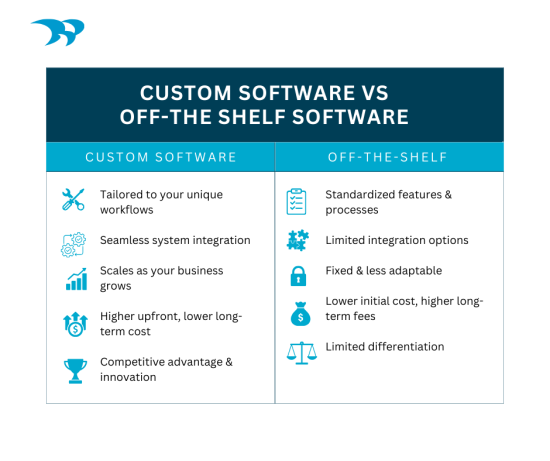
A: Off-the-shelf software works best for standardized needs. Custom software makes sense when your workflows are unique, integration is critical, or existing tools force workarounds. If software is core to your competitive advantage, custom solutions often deliver greater long-term value.
Consider all your requirements when choosing between off-the-shelf and custom software.
Q: How to choose a custom software development vendor?
A: Look for a partner who understands your industry, asks thoughtful questions, and prioritizes outcomes over features. Strong communication, transparent pricing, proven delivery experience, and a collaborative approach matter more than flashy tech stacks or promises of speed alone. “You get what you pay for” is important to remember.
Here are 10 key criteria for evaluating software developers.
Q: What are some red flags when hiring a software development partner?
A: Red flags include vague estimates, lack of discovery, limited transparency, offshore outsourcing without disclosure, and a “yes to everything” mindset. If a vendor avoids discussing risks, security, or long-term ownership, it’s a sign they may not be a true partner.
Q: Should I use an in-house development team or external software partner?
A: In-house teams offer control but require significant hiring, management, and long-term investment. External partners provide specialized expertise, faster ramp-up, and scalability. Many organizations use a hybrid model, combining internal knowledge with external delivery experience.
Here are some pros and cons for both options plus 5 key considerations.
Q: Is custom software tax deductible in Canada?
A: Custom software costs in Canada are often eligible for capitalization, depreciation, or tax credits such as SR&ED, depending on how the work is structured. Rules vary by project and organization, so it’s important to work with a qualified tax advisor early in the process.
Q: What are the benefits of working with a Canadian software development vendor?
A: Canadian vendors offer strong data privacy standards, regulatory alignment, and cultural and time-zone compatibility. Working with a local team improves communication, accountability, and compliance, especially for organizations with Canadian data residency or governance requirements.
Here’s why Canadian-built software reduces risk.
Custom software is a powerful investment when it’s built with the right strategy and the right partner. If you’re exploring a custom solution or want to understand what’s possible for your organization, the Whitecap team is here to help you take the next step with confidence. Let’s chat.